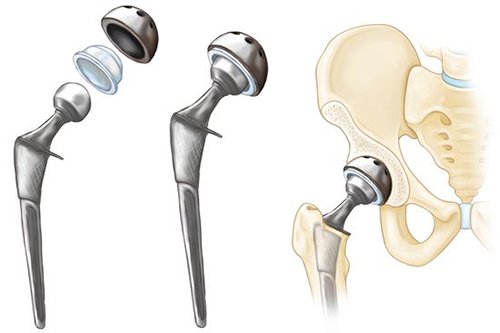
Total Hip Replacement
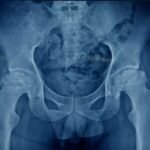
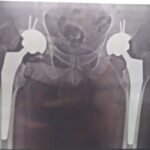
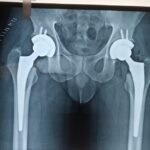
Today’s minimally invasive Direct Anterior hip replacement procedures make it possible for patients to achieve restored joint function with as little inconvenience as possible.
You may be a candidate for hip replacement surgery if you have hip arthritis which is refractory to conservative treatment.
Anterior hip replacement is a minimally invasive and muscle sparing surgery that is an alternative approach to standard posterior hip replacement. Traditionally, posterior hip replacement surgery involves an incision on the back of the hip that cuts through major muscles and tendons to access the hip joint.
When performing an anterior approach hip replacement, the incision is made in front of the hip enabling the surgeon to access the hip joint between a natural interval of muscles. No muscles or tendons are cut during the anterior hip procedure which translates into less pain, shorter hospital stay, and quicker recovery for patients. Additionally, as opposed to standard posterior hip replacements, the anterior hip replacement is performed under robotic guidance or live X-ray to ensure the appropriate position of components and leg length adjustment. Patients who undergo posterior hip replacements typically require lifelong “posterior hip dislocation precautions,” however this is not necessary with anterior approach hip replacement surgery.
The major benefits of anterior hip replacement compared to traditional posterior hip replacement surgery include smaller incisions, less soft tissue injury, reduced pain post-operatively and earlier mobilization.
Most importantly, patient
- can do and sit cross leg sitting,,
- no chance of dislocation,
- no leg length discrepancy,
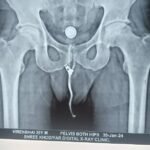
- very very less chance of implant malposition because it can be performed under c arm guidance.
Frequently Asked Questions
The operation is approximately 2 hours.
Yes, it can. The use of robotic or computer assistance adds an additional level of accuracy and precision to the procedure to ensure appropriate positioning of components.
Hip replacements consist of multiple parts – the acetabular shell or socket is made of titanium which accommodates an inner insert made of highly cross-linked polyethylene. On the femoral side, the stem is made of titanium and can accommodate different sized ceramic heads. There is no metal on metal components as existed in previous designs.
We have been able to make significant improvements in the components that we use during hip replacement surgery. The benefit has been increased stability and lower wear rates of the inserts with the use of highly cross-linked polyethylene. Consequently, the issues with “wearing out” the hip implants are no longer a significant or meaningful concern.
Patients undergoing direct anterior hip replacement surgery do not have any precautions following recovery from surgery. Patients are allowed to and encouraged to resume all the activities that they enjoy. Patient’s undergoing the more traditional posterior based hip replacements require hip dislocation precautions to ensure the stability of the hip.
This is different for each patient; some require pain medication as needed for 2-3 weeks. A general rule is that you should try to decrease your use of these medications as time passes.
Most patients stay in the hospital one night and are discharged the day after their operation. Each patient must meet medical criteria for discharge as well as clear physical therapy. If you require more therapy or medical management we will delay discharge until those needs are addressed.
I like to see you in follow up before you go as an outpatient; that way I can tailor your PT to what you need. However, if you feel that it is essential that you begin outpatient PT right away, you can call my office and we will provide a prescription and a list of places.
You should not drive as long as you are taking narcotic pain medication. Since you are able to sit in regular chairs when you are comfortable, you will be able to drive when you are comfortable sitting and able to lift your leg from side to side. If it is your left hip, you can resume driving when you feel your reaction times are back to normal (about 2-3 weeks). If it is your right hip, you may need to wait another 2 weeks.
The clicking is a result of the soft tissues moving across around the hip, or the artificial parts coming into contact with one another. This sensation usually diminishes as your muscles get stronger.
Fluid can accumulate in the legs due to the effect of gravity. It is not unusual that you didn’t have it in the hospital, but it got worse when you went home (because you are doing more!) To combat this, you should elevate your legs at night by lying on your back and placing pillows under the legs so that they are above your heart. There are also TEDS stocking (the white stockings from the hospital) that you can put on during the day – have someone help you on with them in the morning, use them during the day, and then take them off at night. If you did not get the TEDS from the hospital, you can purchase knee high, medium (15-20 mm Hg) compression surgical stockings at most drug stores.
You can go to the gym and resume upper body workouts, as long as the hip is in a non-loaded position (you should be sitting, not standing when using weights). Do not swim or do any activities involving submerging the incision in water.
It depends on your occupation. It is never a mistake to take more time off at the beginning of your recovery, as it will give you time to focus on your hip. I recommend taking at least 4 weeks off after a THR, however, this time frame may be longer or shorter depending on your profession.
In general, I like to see you before you fly within 6 weeks of surgery. If you are traveling by car, you should be sure to take frequent breaks so that you don’t feel too stiff when getting up. On an airplane, I like you to wear compression stockings (if within 1-month postop), and take a couple of walks during the flight. Having an aisle and bulkhead seat will help you get more space.
Explore Our Journey