Robotic-Assisted Hip and Knee Replacement
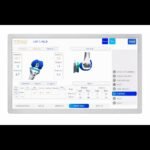
Robotic-assisted hip and knee replacement is a treatment option for patients with osteoarthritis of the hip or knee that has been refractory to conservative treatments. The MISSO Robotic-Arm Assisted system provides each patient with a personalized surgical plan based on each individual’s unique anatomy by patients own CT scan. A pre-operative CT scan of the hip or knee joint is obtained. The scan is uploaded into the MISSO software allowing a virtual three-dimensional model of the joint to be created. This model can be used for precise templating and pre-operative planning prior to even entering the operating room.
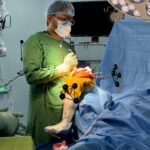
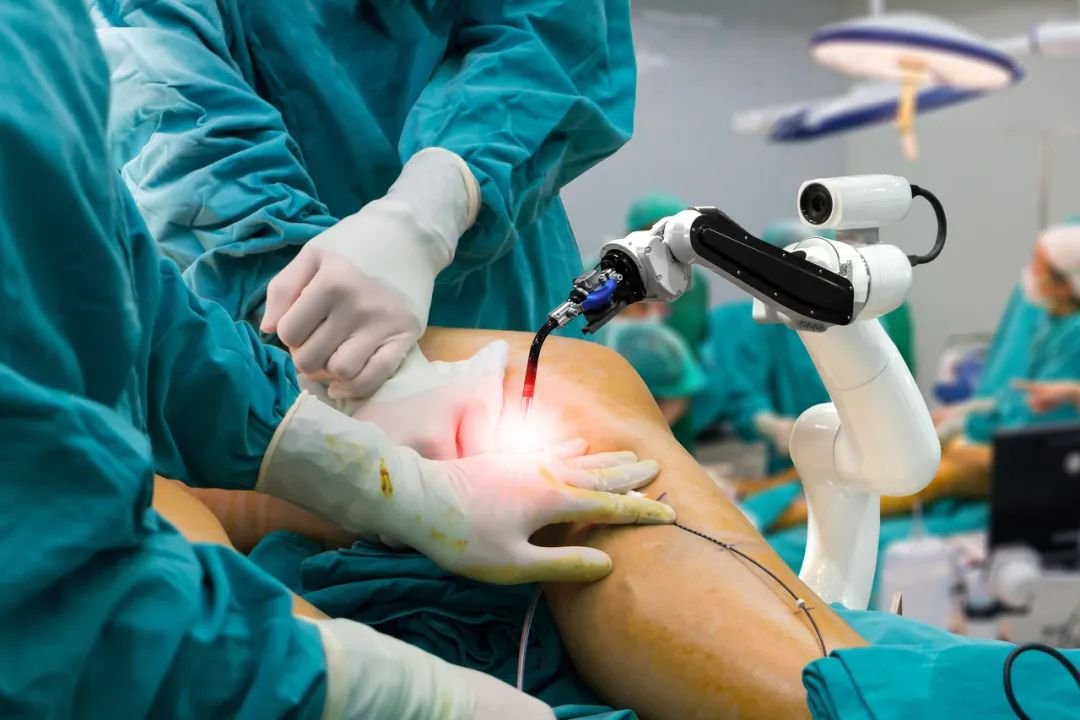
Once the plan is finalized, we can proceed with the operation. The patient is brought into the operating room and the surgical approach to the hip or knee joint is performed. The hip or knee joint is registered and matched with the pre-operative CT scan. The MISSO system then provides real-time feedback on technical elements of the patient’s joint such as ligament tension, leg length discrepancy, and offset measurements. Based on this information Dr. Sagar Kothiya can make further fine adjustments on the component position as needed. Next, the bone preparation takes place with the use of the MISSO Robotic-Assisted Surgical Arm. The entire procedure is performed by Dr. Sagar Kothiya who guides the MISSO Robotic-Arm during surgery to ensure accurate and precise component placement. The MISSO Robotic-Arm is a tool that the surgeon uses during the operation; it does not perform surgery, make decisions on its own, or move without the surgeon controlling the robotic arm.
Frequently Asked Questions
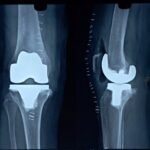
The MISSO robotic arm allows accurate placement of components during hip and knee replacement procedures. The use of these technologies enables the surgeon to perform minimally invasive hip and knee replacement with increased surgical precision and minimal soft tissue injury. This translates into shorter hospital stays, less pain, and faster recovery for patients.
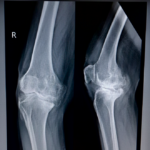
Plain radiographs obtained in the office offer a two-dimensional view of the hip or knee joint. The Mako system utilized a pre-operative CT scan to establish a three-dimensional model of the hip or knee joint that allows individualized pre-operative planning and component positioning.
No, the robotic-arm doesn’t perform surgery, nor can it make decisions on its own or move without the surgeon guiding it.
The robotic arm is a tool that is used to place implants accurately and precisely. The implants used for hip and knee replacement have been in the market for decades and have good long term survivorship data. For most patients, the implants should last for the rest of their lives.
Most insurances, including Medicare and Worker’s Compensation plans, cover the use of the robotic arm. We pre-authorize the Mako surgery with your insurance just like we would a standard hip or knee replacement and then our billing team provides the patient with estimates in terms of cost and out of pocket expenses. Feel free to reach out to our office if you would like to inquire about your specific insurance.
Yes, Dr. Sagar has been trained extensively on primary and complex hip and knee replacement surgery. For patient’s who are not candidates for robotic-assisted hip or knee replacement, he is well trained on the most advanced techniques in standard minimally invasive knee replacement and anterior hip replacement.
The MISSO system is only available at the Kothiya Hospital, Nikol ,Ahmedabad .
Conventional Replacement | Robotic assisted replacement |
Bone cuts are more as compared | Minimum bone cuts |
Femoral canal need to b opened | Femral canal not opened |
Less bone preserved | More bone preserved so longevity of implants remain longer |
X ray based | Ct scan based |
Implant position less options | Femoral component can be placed in varus, valgus, internal external rotation, anterior and distal upward downward, in flexion extension |
Explore Our Journey